Student Voices in Innovation: Contributing to Engineering Education at SEFI 2025
Third-year Circular Engineering students presented innovative projects on ludodidactics and sustainability in calculus at SEFI 2025, showcasing student-driven education.
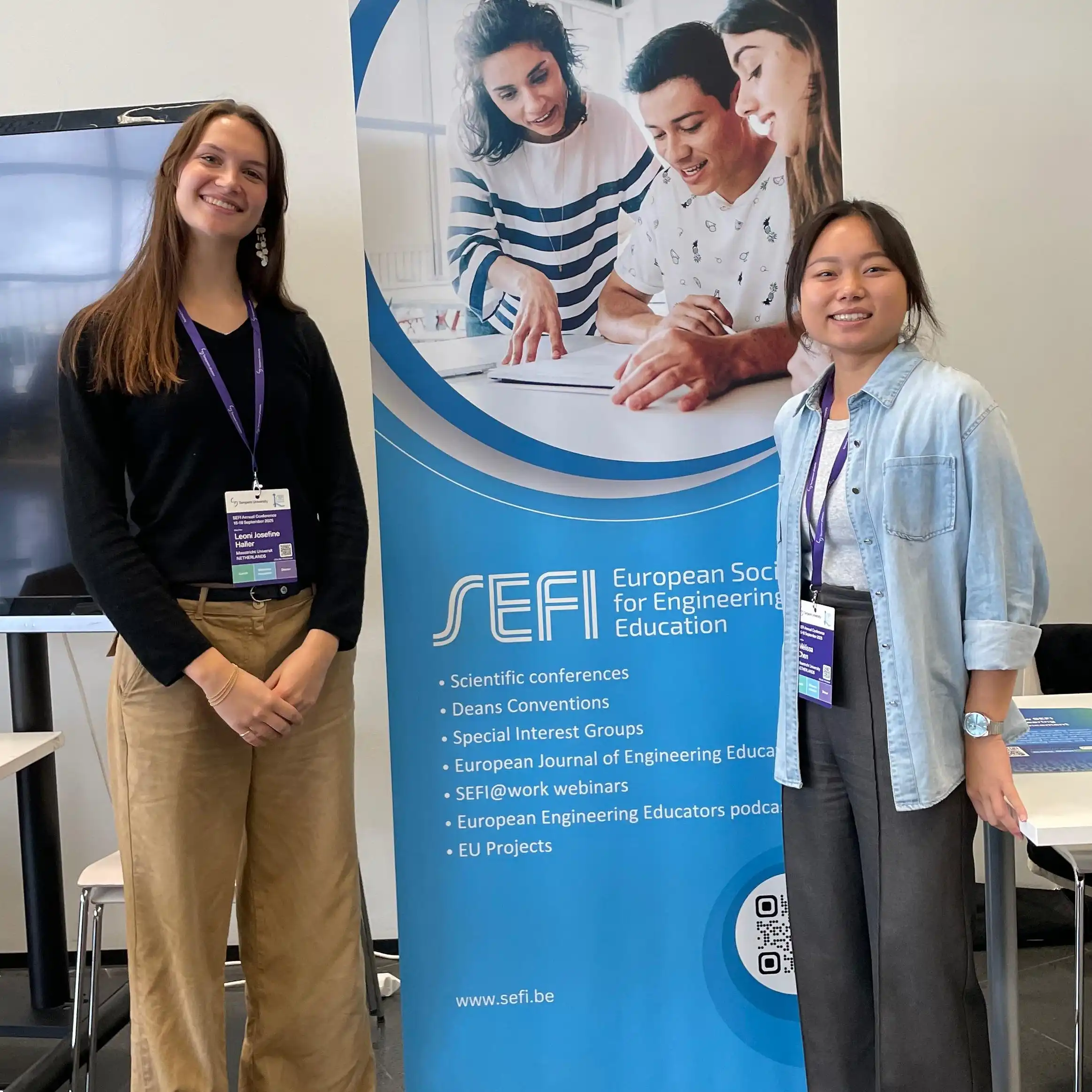
What does it look like when students are truly involved in shaping their education? Two third-year bachelor students, Leoni Haller and Mélissa Chen, recently presented their work at the SEFI (European Society for Engineering Education) annual conference in Tampere, Finland. Under the mentorship of Dr. Ir. Martijn Boussé, they worked on education innovation projects aimed at improving their program BSc Circular Engineering at Maastricht University. At the conference, they shared these projects with engineering educators, starting conversations and exchanging ideas on how to improve engineering education.

Mélissa hosted a workshop session “Calculus Legacy: A Ludodidactical Learning Experience for Mathematics in Engineering Education”, in which the participants play-tested one of the game sessions under the Calculus Legacy Project. Through the legacy-style boardgame, the educators explored the principles of ludodidactics and exchanged insights on the challenges and opportunities coming with such an educational approach. Many participants expressed their interest in implementing game-based learning in their own teaching, highlighting the collaborative and interactive nature of the learning experience.

Leoni presented her work on “Co-creating Authentic Learning Experiences in Mathematics: Integrating sustainability into engineering calculus”, which focuses on the integration of sustainability topics into a core mathematics course. The Sustainable Development Goals were used as a framework to create real-life examples that bridge the gap between sustainability and mathematics, making calculus more tangible for students. With sustainability being a major theme at the conference, it was encouraging to see how relevant the work felt and how participants connected with the ideas presented.

Both students wanted to thank the Computer Sciences Education (CSE) group for making this possible and supporting student involvement in the engineering education field.