Using CCCS Learning Principles to Design Meaningful Assessments – ICAB 2025 Workshop
At ICAB 2025, I hosted a workshop on using CCCS learning principles to design meaningful assessments, featuring the CCCS Advocate Game—a collaborative, student-centered assessment redesign exercise.
The ICAB 2025 Conference is an annual event in the Netherlands bringing together educators, researchers, and innovators in STEM education to discuss relevant topics. This year’s theme—student engagement—was particularly relevant to our work at Maastricht University. In recent projects such as Calculus Legacy, Making Calculus Sustainable, and our explorations into game-based learning, we have continuously sought ways to make learning more interactive, meaningful, and inspiring in the Research Group on Computing Sciences Education (CSE). ICAB 2025 provided an excellent platform to share and exchange ideas on how assessment can drive student motivation and deeper learning.
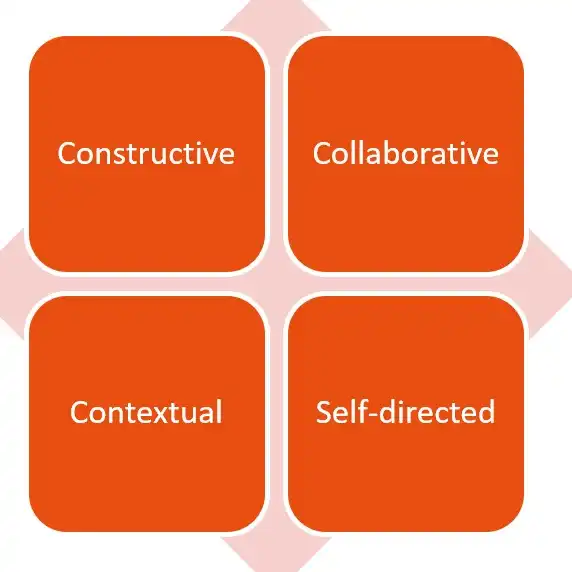
One of the highlights of my participation was hosting a workshop on using CCCS learning principles—Constructive, Contextual, Collaborative, and Self-directed learning—to design meaningful, motivating, and inspiring assessments. The workshop introduced participants to the CCCS Advocate Game, a hands-on approach to redesigning assessments through a structured but flexible game-based framework.
The CCCS Advocate Game: Turning Assessment Design into a Co-Creation Exercise
The CCCS Advocate Game is a collaborative exercise that helps educators (re)design their assessments by applying the CCCS principles. In this game, a group of five participants works together, with one person taking on the role of the redesigner, who presents an existing assessment from their course, and the remaining participants acting as advocates for one of the four CCCS learning principles.
Game Setup:
- The redesigner explains the context of the assessment (course, program, and assessment type).
- The advocates suggest redesign strategies, placing their ideas in different CCCS “buckets” (Constructive, Contextual, Collaborative, Self-directed).
- Together, the group builds a new assessment that incorporates these ideas while ensuring constructive alignment with learning outcomes.
- A plenary discussion follows, allowing participants to reflect on their learning experience and how they might apply CCCS principles in their own courses.
During the game they use the game board, see image below, to guide the process.

The game sparked dynamic discussions, with participants sharing creative ideas on improving assessments in STEM disciplines. Many participants left feeling inspired to redesign their own assessments using CCCS principles, and some even invited me to host this workshop at their own institutions—a clear sign of its impact!
Connecting to Assessment Partnership
Beyond the CCCS Advocate Game, another key theme at ICAB 2025 was Assessment Partnership—involving students in the design of their own assessments. This approach aligns closely with CCCS principles, particularly collaborative and self-directed learning. One way to bring students into assessment design is to have them play the CCCS Advocate Game themselves, allowing them to reflect on what makes an assessment meaningful and motivating. When students take part in the design process, research shows that they develop a stronger sense of autonomy, motivation, and responsibility in their learning.
As one speaker put it:
"Partnership is not a bag of tricks but a way to redefine the cultures and values of our classrooms."
ICAB 2025 was a fantastic event, and this workshop was a great opportunity to share insights, learn from others, and continue refining our approach to engaging, student-centered assessment design.
Author: Dr. Ir. Martijn Boussé, m.bousse@maastrichtuniversity.nl.